HANDS FOR HONDURAS INC.
HOME OF CARIBBEAN CLEANUP
This is not only a beach cleanup. It is a town beautification process, and it is a movement — a total community support project. The chain runs one way: cleanup, beautification, tourism, jobs. Local families are the owners and the beneficiaries of that chain.
The Gathering week works the course blocks day by day — work mornings, heritage and music evenings, and kids on the beach throughout.
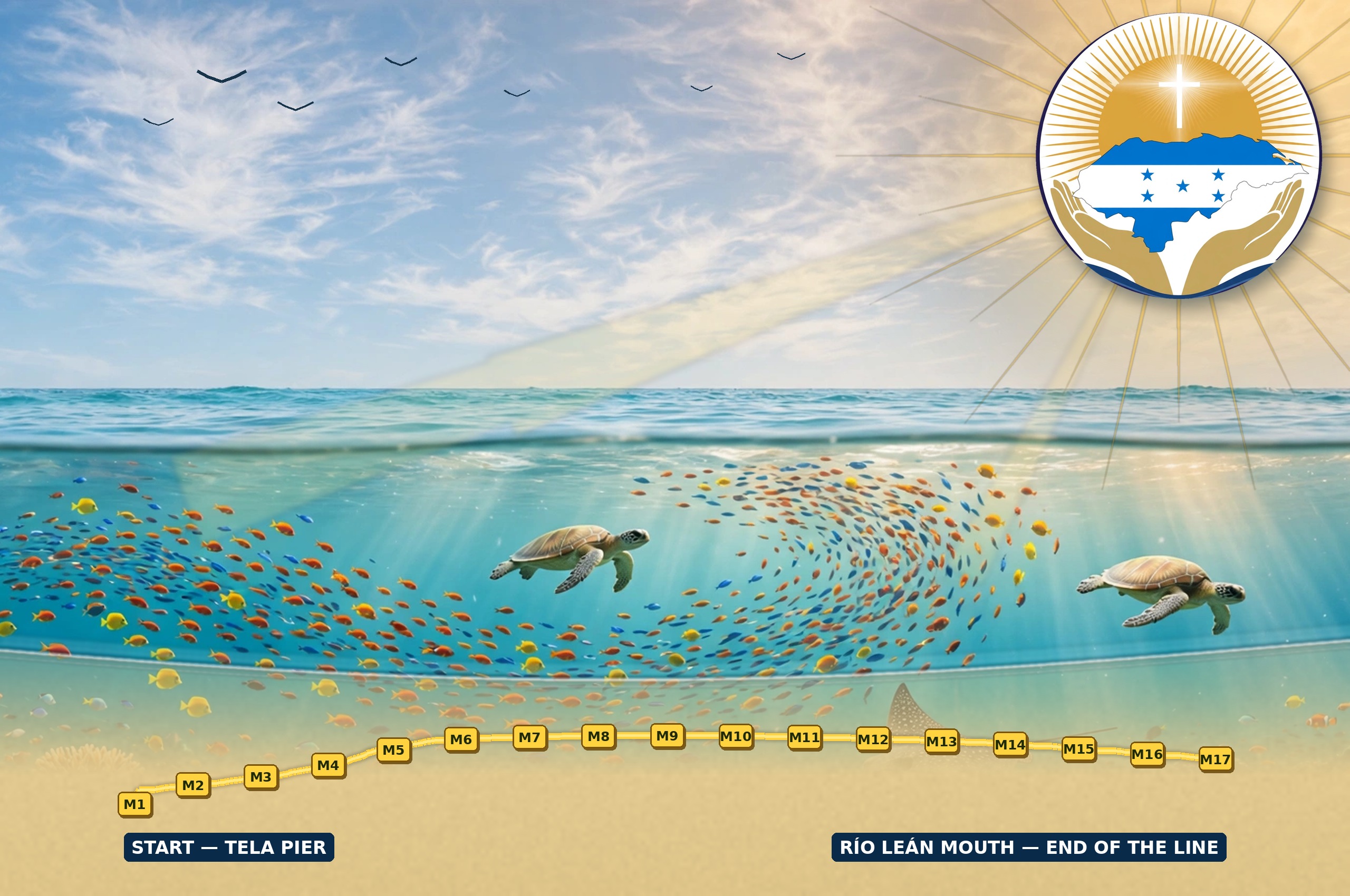
The map is drawn. The miles are numbered — M1 to M17. One of them has your name on it. Registration opens late November 2026.
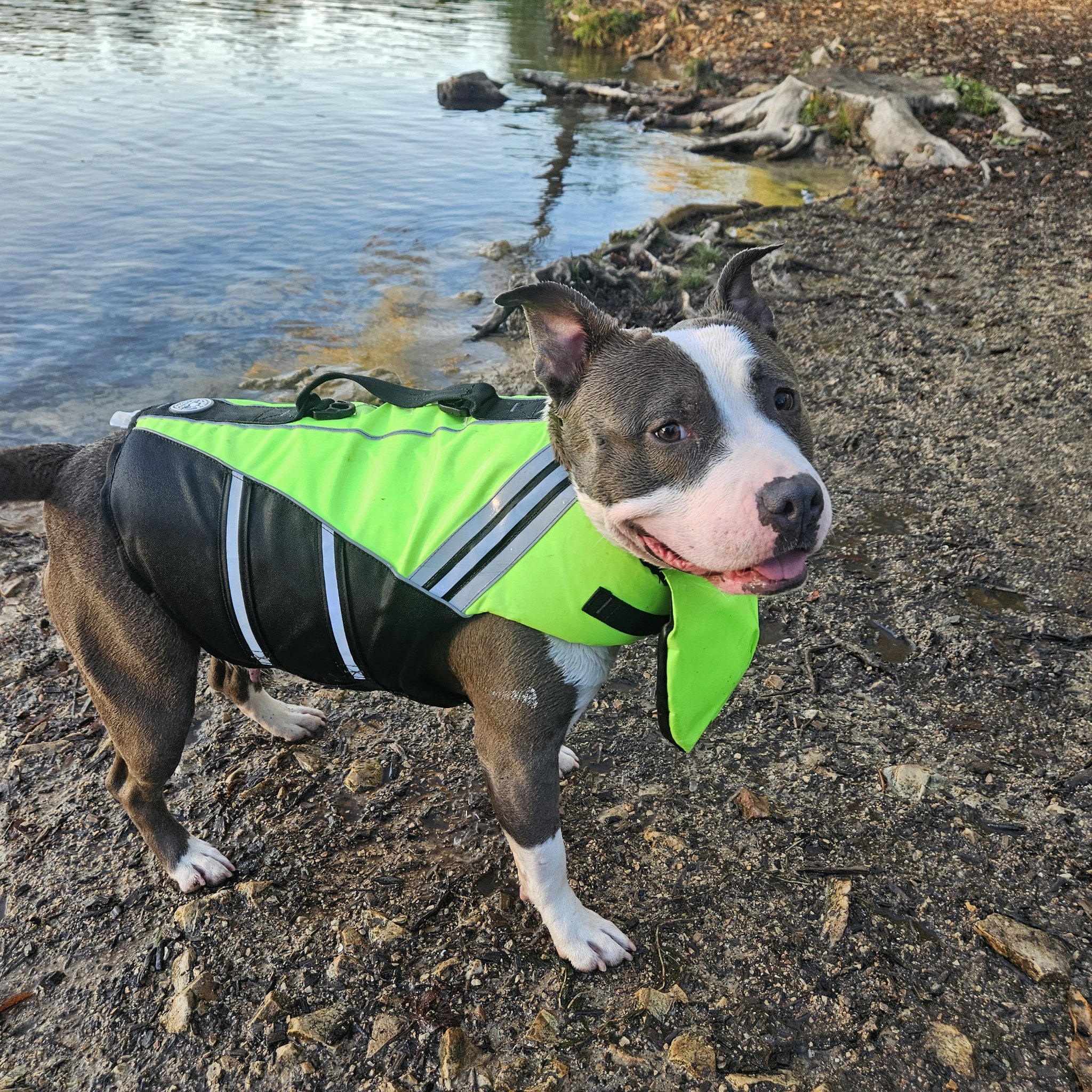
Lucy is a rescued gray-and-white pit bull, and she is the mascot of Hands for Honduras. She was given a second chance — and now she stands at the front of everything this house does.
She stands for the sanctuary at Punta Izopo, for the buy-and-release that returns creatures to their home, and for every animal on this coast who cannot speak for itself. When you see Lucy, you see why we fight for this shore.
And on February 20, 2027, Lucy will be there — in her lifejacket, on the shore at La Ensenada, at the world's largest beach cleanup. Come meet her where she belongs: at the front of the work, greeting the army she helped inspire.
The $1 Army keeps a permanent roll of its first one thousand members — the Founders Wall. A name on this wall is the only prize this house offers, and it is offered in the open: recognition, not a raffle, not a drawing, not a promise of anything but remembrance.
4 names on the wall today · 996 of the first 1,000 places stand open
THE DOLLAR IS A DOLLAR. Joining the $1 Army costs exactly $1 a month. At checkout, our platform Zeffy offers an optional tip for itself — 17 cents suggested on a dollar. Set it to zero if you wish: we receive your full dollar either way, and Zeffy takes nothing from it.
Student teams of three to five, sponsored by a teacher, run real marketing aimed at adults — inviting them to join the $1 Army at a dollar a month. Every enlistment is counted by the team's own code, and it counts for good only when it is still active at day 90. Half of every dollar raised under a school's codes builds that school's own grant fund. The standings are public, the books are open, and the ocean is the team that wins.
Hands for Honduras, Inc. works in Honduras and from Lannon, Wisconsin. Every initiative below carries its own tag, keeps its own book, and publishes its own numbers. Pick a room. The record is open.
Stop the plastic at the river, before the ocean ever sees it.
OpenCreatures created for this habitat, protected in it — patrols, habitat, and the buy-and-release.
OpenOne dollar a month. An army that saves the ocean, feeds the children, and publishes every number.
OpenDesignation discipline. The organization has exactly four donor designations — Clean Water · Animal Welfare · Beach Cleanup · Motagua River Pilot. No initiative in this index creates a fifth. Each tag keeps its own book, counted and published.
Most ocean cleanups chase plastic after it has already scattered across the sea. Interception at the source stops plastic while it is still in one place, still cheap to catch, and still out of the food chain. Every kilogram is mapped, contained, collected, weighed, recorded, and reported.
“We work the river.”
Removing plastic from the open ocean costs a fortune and catches a fraction. Stopping it in the river — where it starts — is the only math that ever catches up.
Our crews are local residents earning real wages in green jobs. A cleaner river, a fed family, and a reason to stay home — one budget buys all three.
Cleanup is step one. Working with engineer Greg Randall, the collected waste is destined for conversion into diesel fuel and electricity — a permanent answer, not an endless cleanup.
A captain is a soldier of the $1 Army who asks their own people — their family, their workplace, their church, their feed. Captains are volunteers. No captain is paid, and no one in this house is ever paid a percentage of donations — that rule has no exceptions and no season. First captain pages open December 1.

